Can AIRFLOW be used on ceramic veneers?
Yes, with an appropriate indication and protocol. EMS includes restorations among GBT applications and describes fine erythritol-based AIRFLOW PLUS for biofilm management on restorative surfaces.
SAIZ · SIGNATURE DENTISTRY
Maintaining veneers is not just about keeping ceramic bright. Biofilm control, gum health, margins, interdental cleaning and function all matter. An AIRFLOW GBT session is €150. As a general guide for veneer maintenance, we recommend it every 3–4 months, adjusting the interval to each patient's gum health, habits and individual needs. Guided Biofilm Therapy uses disclosure and targeted removal to guide professional maintenance.
Request an assessment ↗
DIRECT ANSWERS
Yes, with an appropriate indication and protocol. EMS includes restorations among GBT applications and describes fine erythritol-based AIRFLOW PLUS for biofilm management on restorative surfaces.
Air-polishing systems are not all alike. The effect depends on powder, particle size, pressure, distance, angle and exposure time. A system and protocol indicated for restorations matter.
No. GBT is a complete protocol: assessment, biofilm disclosure, instruction, targeted removal of biofilm and calculus when indicated, final check and maintenance planning.
It does not alter the ceramic’s intrinsic shade. It may remove biofilm and some surface staining, restoring a clean appearance without changing its underlying colour.
The transition between veneer, tooth and gum needs to remain clean and clinically stable. Persistent biofilm at a margin can accompany inflammation, bleeding or gum changes even while the ceramic looks glossy.
Professional maintenance checks gums, margins and interdental areas as well as stains.
A central GBT step is to disclose biofilm before removal. This shows where it has accumulated and helps avoid treating surfaces indiscriminately.
It also helps patients see which areas require better care at home.
AIRFLOW PLUS uses fine erythritol particles and is indicated by EMS for multiple surfaces, including restorations. Manufacturer-cited literature compares its effects on composite, ceramic and gold restorations with conventional methods.
This does not justify using any abrasive powder, device or exposure time on a veneer.
Follow-up may include bite, margins, gums, interdental hygiene and signs of overload. If bruxism or a protective splint is relevant, these are reviewed too.
We do not claim that GBT adds a specific number of years to a veneer; it helps control biofilm and tissues within professional follow-up.
Brushing, interdental cleaning and habits must fit each patient’s anatomy. If floss catches, a gum repeatedly bleeds or an area feels rough, arrange a clinical review.
FROM JUDGEMENT TO RESULT
Complete photographs of real SAIZ cases. Every smile requires its own diagnosis and treatment plan.
Explore the cases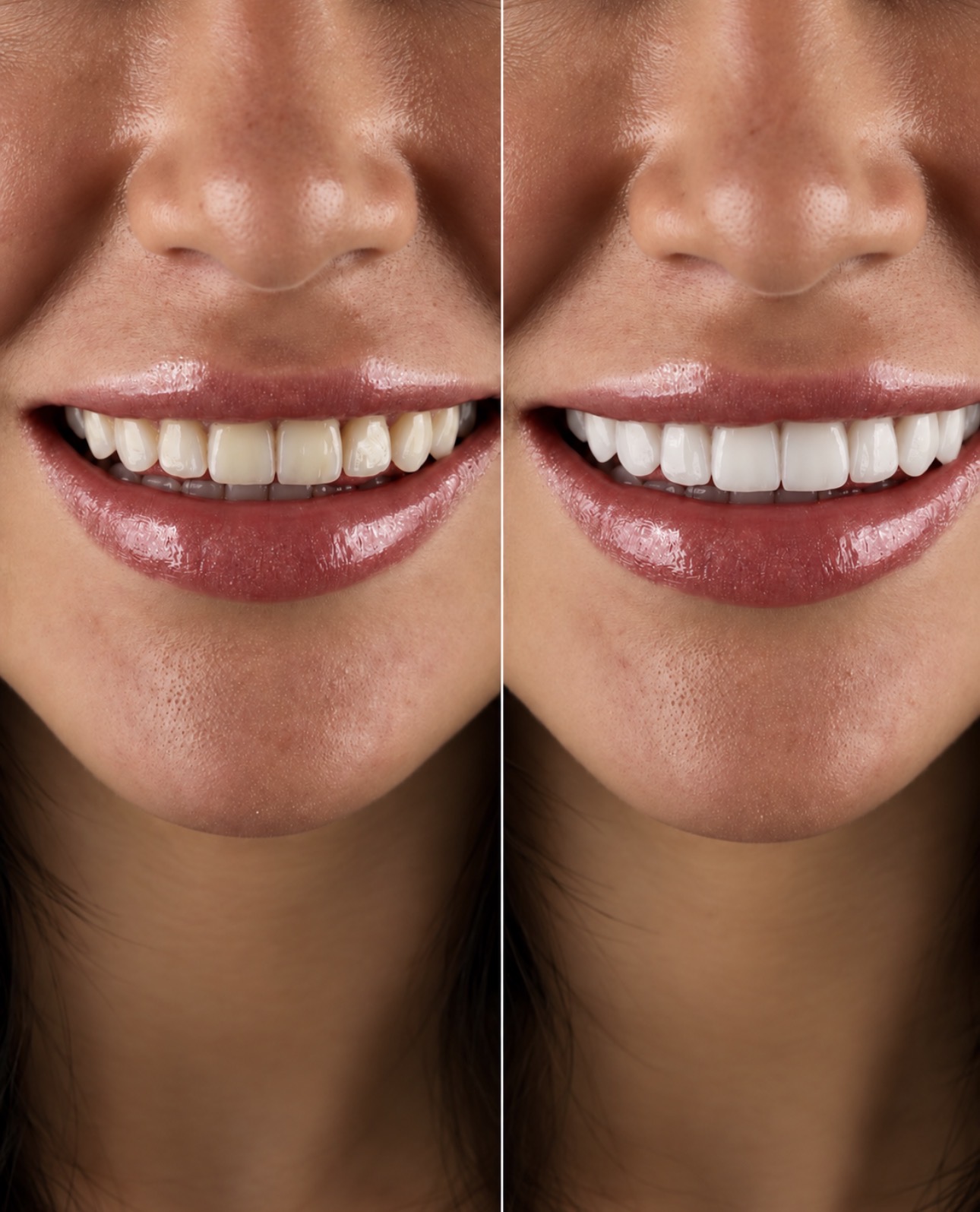
FINDING THE RIGHT TREATMENT
The starting point is what you would like to change. The clinical assessment confirms which option makes sense.
General information, not a diagnosis. Patient reference: dental veneers · American Dental Association.
FREQUENTLY ASKED QUESTIONS
Veneers are not immune to tobacco. In his clinical experience, Dr Carlos Saiz observes deterioration in colour and in the margins where veneer and tooth meet in patients who smoke. This is a clinical observation, not a claim that every person is affected in the same way. Laboratory studies have also reported colour changes in ceramics exposed to smoke, and smoking increases the risk of gum disease. If you notice staining, a dark edge or a rough area, we assess whether it is a surface deposit or a marginal problem before choosing treatment. Cleaning cannot correct every form of deterioration. Stopping smoking is part of caring for your smile; we can guide you without judgement.
If a veneer becomes detached, keep it safe and contact SAIZ first for instructions. Do not try to bond it at home. When treatment is completed, we provide a certificate detailing the materials used and relevant cementation information. If you are abroad, this documentation helps another dentist continue your care, although contacting us first is still best. We assess whether the veneer can be re-bonded, repaired or needs replacement based on its condition, the tooth, the margin and your bite.
Ceramic generally has good surface stability, but external deposits or staining can appear. Margins, cement and adjacent tissues also affect the appearance.
A correctly bonded veneer should not come loose with normal flossing. Repeated catching or fraying of floss warrants a review of the margin and contact.
Generally yes. Technique, pressure and gum condition matter more than whether a brush is electric or manual.
There is no universal choice. Avoid indiscriminate use of highly abrasive pastes and tailor hygiene to the ceramic, gums and natural teeth.
Local biofilm, inflammation, a contour that is hard to clean or another gum or restorative problem may be involved. Persistent bleeding needs assessment.
Not automatically. The procedure depends on the material, surface condition and what actually needs cleaning or correction.
The objectives are the same: controlled biofilm, healthy gums, reviewed margins and stable function. Individual contours determine the areas that need extra care.
We will help you understand the options for your own smile.
Request an assessment Barcelona · Madrid · MarbellaDr. Carlos Saiz · Professional registration no. 3756
Barcelona · Healthcare registration E08628853
Madrid · Healthcare registration CS17392
Marbella · NICA 65339
CARLOS SAIZ SMILE, S.L.P.U. · NIF B56991870 · Legal notice